
If you have IBS, you may already know this pattern: Your stomach acts up during stressful weeks, travel, poor sleep, or big life changes. You eat the same foods, but your gut reacts differently depending on what is happening in your life.
Many people wonder, “Is this really connected, or is it just a coincidence?”
It is not a coincidence. IBS is one of the clearest examples of how closely the gut and brain work together.
Let’s break it down in a simple way.
Understanding the Gut Brain Connection
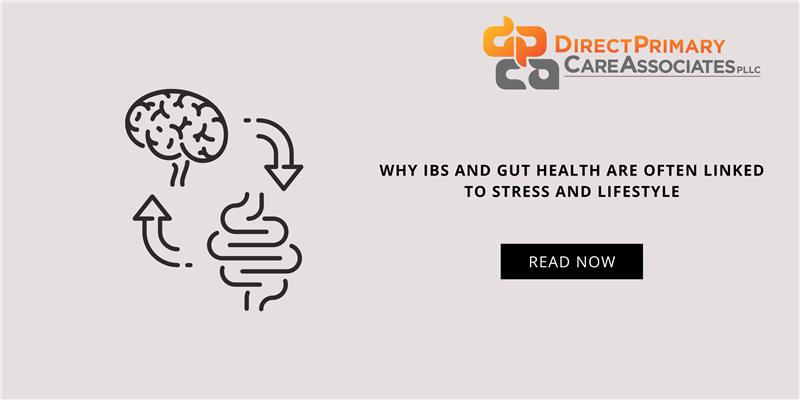
The gut brain connection is the two-way communication between your digestive system and your nervous system. Your gut has millions of nerves that constantly send messages to your brain and receive signals back.
This is why emotions can affect digestion. Think about how stress can cause “butterflies” in your stomach or how anxiety can reduce appetite. IBS works on that same pathway, just in a more sensitive way. For a deeper dive into the gut-brain relationship, see Unlocking the Power of a Healthy Gut: A DPC Approach to Gut Health.
When the brain senses stress, it can change gut motility, how sensitive it feels, and how it processes digestion. For someone with IBS, these changes can trigger various symptoms.
Your gut is not separate from your mind. They are deeply connected.
The IBS and Stress Connection
The IBS and stress connection is well documented. Stress does not directly cause IBS, but it can make symptoms worse or more frequent.
Stress can:
- Speed up or slow down digestion
- Increase gut sensitivity
- Affect muscle contractions in the intestines
- Influence inflammation and gut bacteria
This is why flare-ups often appear during exams, deadlines, family stress, or major life transitions.
Many patients say, “My gut reacts when life feels overwhelming.” That experience is very real.
Types of IBS You Should Know About
IBS is not the same for everyone. Doctors often group it into types based on symptoms:
- IBS-D – diarrhea is the main symptom
- IBS-C – constipation is the main symptom
- IBS-M – a mix of both diarrhea and constipation
Knowing your pattern can help you and your doctor understand triggers and management strategies. IBS is personal. Two people with IBS can have very different experiences.
Anxiety, Depression, and IBS
Mental health and gut health influence each other more than many people realize.
Anxiety and depression are more common in people with IBS and vice versa.The same gut-brain pathways involved in digestion also play a role in mood regulation.
When someone lives with ongoing gut discomfort, it can increase worry and stress. At the same time, anxiety or low mood can make the gut more reactive. It becomes a two-way loop.
This does not mean IBS is psychological. It means emotional health and digestive health are connected. Addressing both often helps patients feel better overall.
IBS Causes and Treatment: A Broader View
When discussing IBS causes and treatment, doctors look at several factors, not just diet.
These can include:
- Stress levels
- Sleep quality
- Diet patterns
- Past infections
- Gut sensitivity
- Emotional wellbeing
- Past Trauma
There is rarely one single cause or one single solution. Managing IBS usually means understanding your personal triggers and patterns.
IBS Lifestyle Changes That Can Help
Many patients find that IBS lifestyle changes support better symptom control over time. This is not about being perfect. It is about noticing what your body responds to. We share more practical strategies in Living with IBS: How Personalized Care Can Calm Your Gut.
Helpful areas often include:
- Consistent sleep
- Regular meals
- Gentle movement or exercise
- Stress management habits
- Tracking personal triggers
Small adjustments can add up.
A Simple, Honest Takeaway
Stress and lifestyle do not create IBS alone, but they can shape how symptoms appear and how intense they feel.
Understanding that connection can be empowering. It helps you look at IBS as a whole-body condition, not just a stomach problem.
At Direct Primary Care Associates (DPCA), we often help patients look at gut health in the context of daily life, stress, and overall wellbeing. When symptoms are viewed in the bigger picture, it becomes easier to find practical ways to manage them over time. Learn more about what a visit involves on our services page.