
You fasted for 12 hours, showed up to the lab, got your blood drawn, and the fasting glucose number came back normal. Everything is fine, right?
Not always. A fasting glucose test captures a single moment. It tells you what your blood sugar was doing that morning, after hours of not eating. But it says very little about how your body has been handling sugar over the past several weeks. The A1C test fills in those gaps.
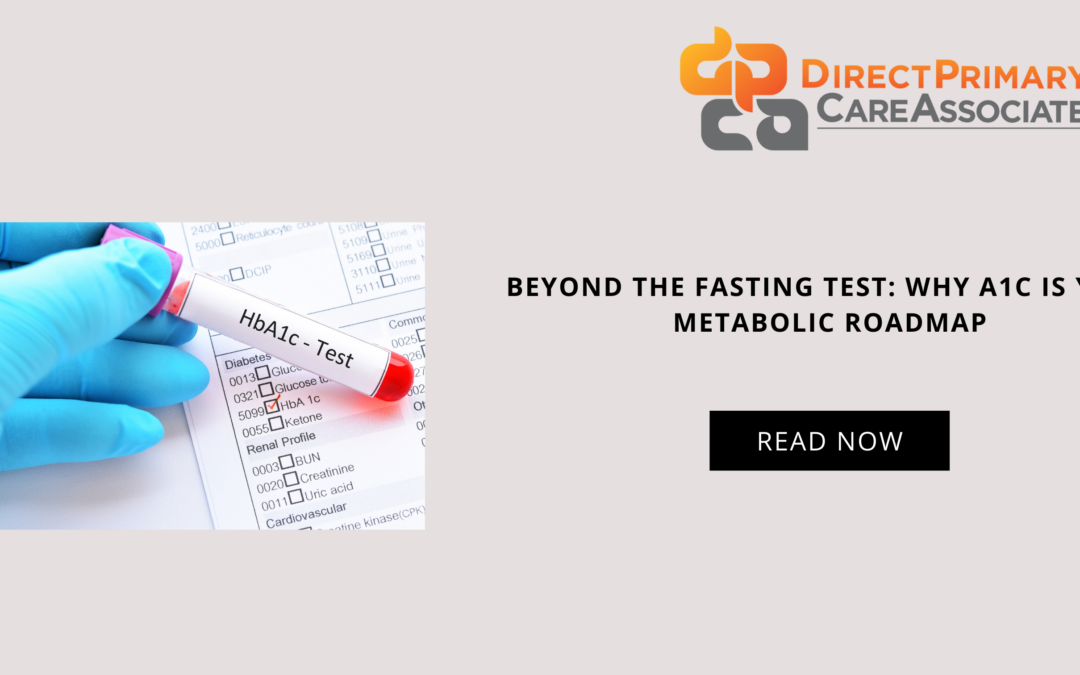
A1C (also called HbA1c) measures the percentage of hemoglobin in your blood that has glucose attached to it. That number reflects your average blood sugar over the previous 2 to 3 months.
What does the A1C test actually measure?
When sugar enters your bloodstream, some of it attaches to hemoglobin, the protein inside red blood cells that carries oxygen. The more sugar in your blood over time, the more hemoglobin gets coated. Since red blood cells live about 90 to 120 days, the A1C test reflects a rolling average rather than a snapshot.
A fasting glucose test is like checking your bank balance at one random moment. A1C is more like reviewing your spending over the last three months. One shows a moment. The other shows a pattern.
The American Diabetes Association classifies A1C results as follows: below 5.7% is considered normal, 5.7% to 6.4% indicates prediabetes, and 6.5% or higher on two separate tests suggests diabetes.
A1C vs fasting glucose: what is the difference?
Both tests measure blood sugar, but they answer different questions. Fasting glucose tells your doctor what your blood sugar is right now, after at least 8 hours without food. A1C tells your doctor how your blood sugar has been trending over the past 2 to 3 months.
This matters more than you might think. Most people are prediabetic without knowing it. Their blood sugar looked fine in the morning, but throughout the day, after meals and during periods of stress, it was spiking in ways the fasting test never caught. If any of this sounds familiar, our overview of signs of insulin resistance you shouldn’t ignore covers the early warning signs in more depth.
A fasting glucose of 95 mg/dL might look reassuring on paper. But if your A1C comes back at 5.9%, it tells a different story: your body is working harder than it should to manage sugar over time, even if the morning snapshot looks acceptable.
Most primary care physicians now use both tests together. They complement each other. But if you had to pick one for understanding metabolic trends over time, A1C gives the fuller picture.
Do fasting and A1C levels affect each other?
No. This is one of the biggest practical advantages of the A1C test. Because it measures glucose attached to hemoglobin over months, what you ate (or did not eat) in the past 12 hours does not change the number. You can take an A1C test at any time of day, after any meal, without any preparation.
This matters if you struggle with fasting requirements, whether because of medication schedules, blood sugar drops, or simply the inconvenience of morning lab appointments. It also means the A1C result is harder to “game.” A few days of clean eating before a fasting test can produce a reassuring number that does not reflect your actual day-to-day patterns. A1C does not work that way.
That said, certain conditions can affect A1C accuracy. Anemia, sickle cell disease, recent blood transfusions, and even pregnancy can alter how hemoglobin carries glucose. In these situations, your doctor may rely more heavily on fasting glucose or an oral glucose tolerance test instead.
Normal HbA1c levels by age: what should you aim for?
The general targets are the same across most adults: below 5.7% is normal, 5.7% to 6.4% is prediabetes. But what “normal” means for you specifically depends on your age and health history.
For younger adults with no other health conditions, most physicians aim for A1C levels in the 4.8% to 5.4% range. The American Diabetes Association recommends screening starting at age 35, or earlier if you have risk factors like obesity, family history of diabetes, or a history of gestational diabetes.
For older adults, the targets sometimes shift. The ADA Standards of Care for Older Adults note that overly aggressive A1C targets in adults over 75 can lead to harmful hypoglycemia, where blood sugar drops dangerously low. For these patients, doctors may accept an A1C of 7.0% to 8.0% if the risk of low blood sugar episodes outweighs the benefit of tighter control.
Consider a common scenario: a 62-year-old woman managing both early thyroid changes and borderline blood sugar has relied on fasting glucose for three years, and the number has always been normal. When her doctor adds an A1C test, it comes back at 6.1%, well into the prediabetes range. That single result changes the direction of her care plan. With dietary adjustments and a habit of walking 20 minutes after her meals, a patient in this situation could realistically bring her A1C back below 5.7% within six months. For practical guidance on getting started, see our prediabetes meal planning tips.
Your age, medications, and other health conditions all factor into what your A1C goal should be. A number on a chart is a starting point. Your doctor fills in the rest.
Does fasting lower A1C levels?
Intermittent fasting has become a popular approach for blood sugar management, so this comes up a lot. Fasting can influence your A1C, but the relationship is not as straightforward as it seems.
A 2021 review in the Annual Review of Nutrition found that intermittent fasting protocols produced modest A1C reductions of 0.5% in people with type 2 diabetes. Those are real numbers, especially when paired with other lifestyle changes, but fasting alone is rarely enough to move someone out of the prediabetic range entirely.
A1C reflects everything your body does with sugar, all day and all night, for months. Fasting for 16 hours helps if it reduces your overall calorie intake or improves insulin sensitivity. But if you eat large, carb-heavy meals during your eating window, the benefit gets washed out.
What tends to move A1C more reliably is the combination of regular physical activity (even walking), balanced meals that pair protein and fiber with carbohydrates, consistent sleep, and stress management. None of that is a quick fix. But it is what the research actually supports.
If you ask, should I fast to reduce my A1 C levels? The answer for this is,it is not mandatory. For some fasting might work, for others it might cause other problems. It is best to consult your doctor before you try fasting.
Where primary care fits into monitoring your metabolic health
A1C is most useful when it is tracked over time. A single result tells you where you are. Multiple results, measured every 3 to 6 months, tell you where you are heading.
An ongoing relationship with a primary care doctor makes a difference here. Your doctor can look at your A1C alongside your fasting glucose, your cholesterol panel, your blood pressure, and what is actually going on in your daily life. They can spot a trend at 5.5% moving toward 5.8% before it becomes 6.2%, and help you make adjustments early. When the numbers suggest something more complex is going on, they can refer you to an endocrinologist who specializes in metabolic and hormonal conditions.
In a Direct Primary Care setting, these conversations happen without the pressure of a 10-minute visit. There is time to talk about what you are eating, how your sleep has been, whether work stress has gotten worse, and whether the changes you made last quarter are actually working. That context is what turns a lab number into an actual plan.
At Direct Primary Care Associates (DPCA), we check A1C as part of a broader metabolic picture, not in isolation. Learn more about what these visits look like on our services page. When patients in Athens, Cleveland, and Dalton can sit down for 30 to 45 minutes and walk through their results, they leave knowing what the numbers mean and what to do about them.
Frequently Asked Questions
What is the difference between A1C vs fasting glucose?
Fasting glucose measures your blood sugar at a single point in time after 8 or more hours without food. A1C measures the average percentage of glucose attached to your hemoglobin over the past 2 to 3 months. Many physicians use both together because a normal fasting result can mask elevated blood sugar patterns that A1C catches.
What are normal HbA1c levels by age?
For most adults, an A1C below 5.7% is considered normal. This applies across age groups. However, targets may be adjusted for older adults, especially those over 75, where aggressive blood sugar lowering can cause dangerous hypoglycemia. The American Diabetes Association recommends screening starting at age 35, or earlier for those with family history, obesity, or other risk factors.
Does fasting lower your A1C levels?
Intermittent fasting can produce modest A1C reductions of 0.2% to 0.5%, according to research in the Annual Review of Nutrition. The effect depends on whether fasting reduces overall calorie intake and improves insulin sensitivity. It works best when combined with regular movement, balanced meals, quality sleep, and stress management.
Can your A1C be high even if fasting glucose is normal?
Yes. A1C captures what happens to your blood sugar between meals, overnight, and during stressful periods, patterns that a fasting test misses entirely.
Do you need to fast before an A1C test?
No. A1C does not require fasting because it measures glucose that has accumulated on hemoglobin over months, not what your blood sugar is doing at that exact moment. You can take the test at any time of day regardless of when you last ate. Fasting and A1C levels are independent of each other.