
Annual Physical vs. Wellness Visit: What’s the Difference?
Not sure if you need an annual physical or a wellness visit? This guide explains the key differences, what each includes, and how to avoid surprise costs.
Blog
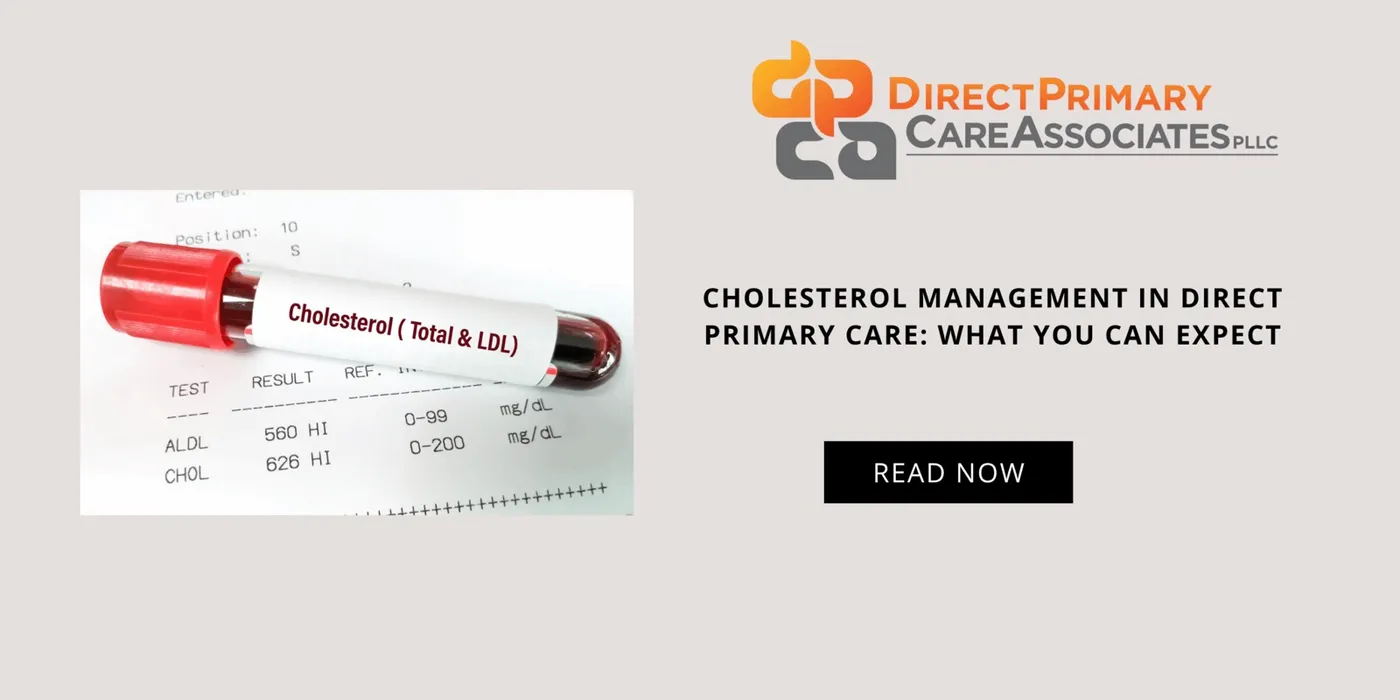
Managing cholesterol is more than a numbers game. It’s a long-term strategy rooted in prevention, conversation, and consistency.
Many patients only hear about their cholesterol during an annual physical, often through a brief explanation or a quick medication adjustment. But for something as central to heart health as cholesterol, patients deserve more than a rushed conversation and a prescription. They need guidance, context, and a plan that adapts over time.
This is where direct primary care offers real value. What sets direct primary care apart is the ability to spend more time with patients, provide easier access to care, and build a more personal, ongoing relationship. If you’re curious about how cholesterol care works in this setting, here’s what to expect.
Cholesterol is a waxy, fat-like substance that travels in the blood, carried by lipoproteins. Your body needs some cholesterol to function, but too much of certain types can increase your risk of heart disease and stroke.
There are different types of cholesterol:
Triglycerides are not a type of cholesterol, but a different kind of fat (lipid) found in your blood. High triglyceride levels can also increase the risk of heart disease and stroke, especially when combined with high LDL or low HDL.
Effective cholesterol management focuses on maintaining healthy levels of LDL and HDL cholesterol, as well as keeping triglycerides within a healthy range, to support long-term heart health. This kind of tracking pairs naturally with metabolic markers like A1C, which we cover in more detail elsewhere on our blog.
In a direct primary care setting, a cholesterol management consultation is not a one-and-done visit. It’s part of a larger, ongoing conversation about your overall health and risk factors.
During your visit, your provider will:
The consultation is designed to give you clarity, confidence, and a shared plan that makes sense for your life, not just your lab results.
Treatment for high cholesterol depends on more than just your LDL number. Your provider will take a full view of your health, including:
After reviewing these factors, your provider may recommend changes in diet and exercise, consider medication if needed, or adjust existing treatment. Since high cholesterol and high blood pressure often occur together, your provider may address both at once. In DPC, you’ll have time to discuss your options and make an informed decision together.
In traditional care models, many patients only receive cholesterol updates once a year, or only after something goes wrong. Direct primary care changes that experience by offering:
With this model, cholesterol management becomes more proactive. You’re not just reacting to numbers, you’re tracking trends, staying engaged, and working toward measurable improvements over time.
Lowering cholesterol is not only about medication. It often requires changes in how you eat, move, and manage stress. In a DPC setting, you’ll have more support to make those changes stick.
This might include:
The direct care model gives you space to work through challenges, refine your approach, and stay consistent without feeling rushed.
Once a treatment plan is in place, the next step is monitoring. DPC makes it easy to keep an eye on your progress with in-clinic labs, quick follow-ups, and easy communication.
If your treatment for high cholesterol includes medication, your doctor will track how your body is responding, check for side effects, and make changes if needed. You’re never left wondering if things are working, you’ll have the data and support to know for sure.
Managing cholesterol is not about perfection. It’s about staying informed, having the right tools, and working with a provider who helps you adapt along the way.
At Direct Primary Care Associates, we support our patients with ongoing care that fits real life. Whether you need a fresh start, a second opinion, or more consistent consultation for high cholesterol, we’re here to help you take the next step with clarity and confidence. Take a look at our full services to see everything included in membership.
Not sure if you need an annual physical or a wellness visit? This guide explains the key differences, what each includes, and how to avoid surprise costs.

Wondering if your testosterone levels are low after 40? Learn what testing actually involves, from blood work and timing to what your results really mean.

Need a sports or school physical in Athens TN, Cleveland TN, or Dalton GA? We make it fast and easy, walk in or book your appointment today.
Signing up takes a few minutes, and you can bring your questions to your first visit.
Display options