

Annual Physical vs. Wellness Visit: What’s the Difference?
Not sure if you need an annual physical or a wellness visit? This guide explains the key differences, what each includes, and how to avoid surprise costs.
Blog
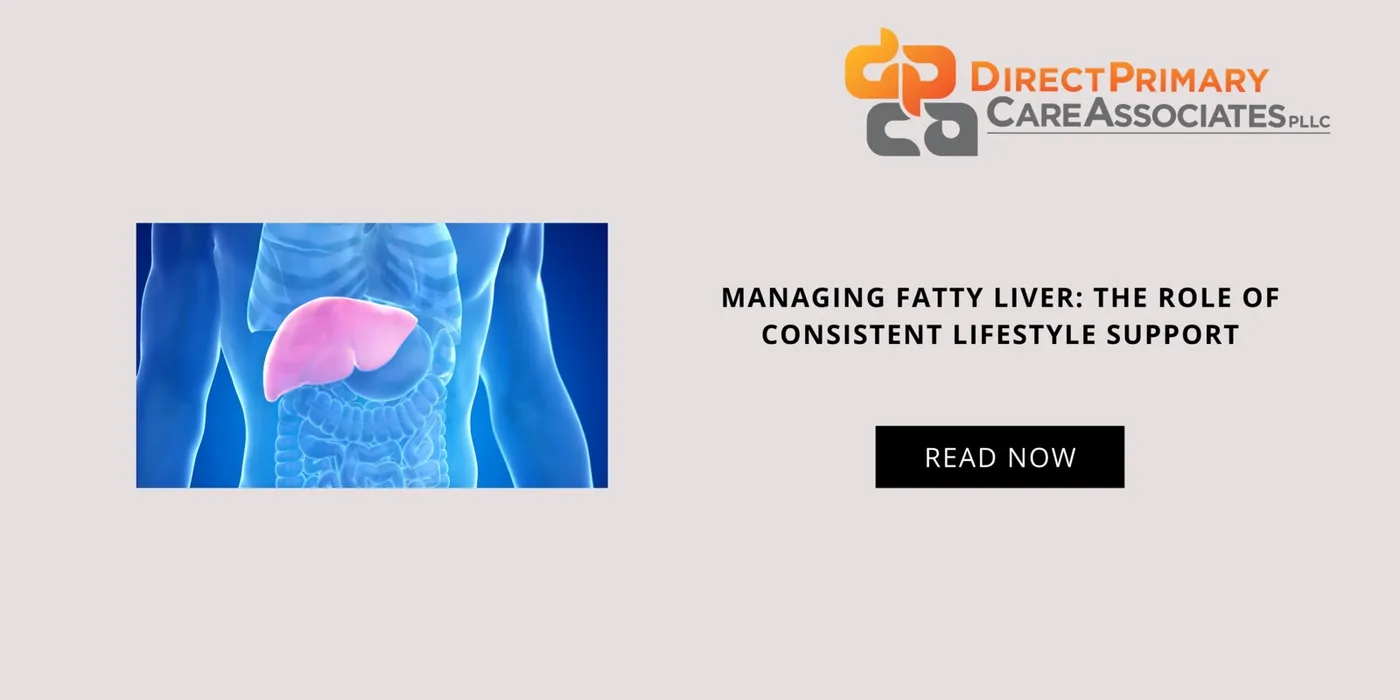
Nobody expects to hear that their liver has too much fat in it. There is no pain, no warning, no symptom you would notice in your day-to-day life. Most people find out during a routine blood test when their liver enzymes come back higher than they should. Their doctor orders an ultrasound, and suddenly they are looking at a diagnosis they never saw coming.
Is fatty liver disease reversible? In its early stages, yes. For people carrying extra weight, research shows that losing just 5% to 10% of body weight through diet and lifestyle changes for fatty liver can reduce liver fat, calm inflammation, and in some cases even improve early scarring. For leaner individuals, the focus shifts to improving diet quality, increasing physical activity, and addressing insulin resistance. Either way, the liver is one of the few organs that can actually repair itself, but only if the damage has not gone too far.
Your liver can handle a certain amount of fat. When that amount creeps too high, you get what doctors now call MASLD (metabolic dysfunction-associated steatotic liver disease). In its earliest form, called simple steatosis, the fat is there but it has not started causing real damage yet. At this point, the condition can be completely turned around.
But if the fat stays and inflammation sets in, you move into a more serious stage called MASH. And if that goes unchecked long enough, scar tissue starts forming. Once significant scarring or cirrhosis develops, it becomes very difficult to undo. That is why the timing of your response matters more than the response itself.
And here is something most people do not realize: you do not need to be overweight to develop fatty liver. Doctors are seeing it in people with a completely normal BMI. It comes down to how your body handles insulin and where it stores fat internally, not just what the scale says. This overlaps closely with what we cover in signs of insulin resistance you shouldn’t ignore.
Forget the “liver detox” teas and cleanses you see online. They do not work. What does work is changing how you eat on a regular basis.
The Mediterranean style of eating has the best track record here. That means more vegetables, olive oil, fish, legumes, and whole grains. Less processed food, less sugar, and less of the packaged snacks that make up most of our pantries.
If you want one change that moves the needle fast, cut out sugary drinks. Soda, sweet tea, fruit juice, flavored coffees. Your liver processes fructose almost entirely on its own, and when it gets more than it can handle, it converts the excess straight into fat. Reducing sugary beverages and total fructose intake has a significant benefit on reducing liver fat buildup. That is a real change from one habit.
Beyond that, pairing your carbs with protein and fiber helps slow digestion and keeps your blood sugar steadier. You do not have to go low-carb. Just be more intentional. Swap white bread for whole grain. Add an egg or some nuts to your breakfast instead of eating cereal by itself. Small shifts like these add up faster than most people expect.
Alcohol is a separate conversation, but an important one. Even moderate drinking puts extra strain on a liver that is already overloaded. Most specialists recommend cutting way back or stopping entirely while you are working on improving your liver numbers.
You do not necessarily need a gym membership or a personal trainer. You can start with exercise as simple as walking. A Penn State study found that 150 minutes of moderate aerobic activity per week, think brisk walking or cycling, significantly reduced liver fat. Some of them did not even lose weight. Their livers still got better.
That is one of the more interesting findings in fatty liver research. Exercise helps your liver even when the number on the scale stays the same. It changes how your body handles insulin and how your liver processes fat, independent of weight loss.
Adding some strength training (weights, resistance bands, or even bodyweight exercises) makes a bigger difference than cardio alone. But the single most important thing is consistency. Walking for 30 minutes five days a week for six months will do more for your liver than an intense boot camp you quit after two weeks.
Because fatty liver takes months to develop and months to reverse. Most people need 6 to 12 months of steady changes before their blood work and imaging show real improvement. That is a long stretch to keep going without anyone checking in.
Consider a common scenario: someone gets diagnosed with fatty liver, goes home motivated, cleans up their diet for a few weeks, starts walking after dinner. Then life gets busy. The old habits creep back. By the time they see their doctor again six months later, not much has changed.
What tends to work better is structured follow-up. Sitting down and going through what you actually ate last week, not what you planned to eat. Figuring out where the hidden sugars are, like that granola bar at 3 PM or the flavored creamer in your morning coffee. Setting a specific, realistic exercise target and checking whether it actually happened at your next visit.
Patients who get that kind of repeated, specific feedback tend to stick with changes longer than those who get a one-time “eat better and move more” conversation and are left to sort it out alone.
They matter more than most people think. Poor sleep and chronic stress both worsen insulin resistance, which is the metabolic problem at the root of fatty liver. If you are averaging five hours of sleep a night and running on stress, your liver feels it, even if your diet is reasonable.
Cortisol, the hormone your body produces under stress, promotes fat storage in the liver when it stays elevated over time. So when we talk about lifestyle changes for fatty liver, we are not just talking about food and exercise. We are talking about sleep, stress, and the habits that affect both. Our piece on why metabolic health matters more than weight alone covers this broader picture.
This is why a good care plan asks about all of it, not just what is on your plate.
Your primary care doctor is usually the first person to catch fatty liver through routine lab work. From there, they handle the ongoing monitoring: tracking your liver enzymes, helping you make and stick with lifestyle changes, and managing related conditions like blood sugar or cholesterol.
For many people with early-stage fatty liver, that level of support is all they need. But when the disease is more advanced, or when lab results suggest inflammation or scarring that is not improving, a referral to a gastroenterologist or hepatologist becomes important. Specialists can order more detailed imaging like FibroScan, decide whether medication makes sense, and manage complications. Your PCP and your specialist work best as a team.
At Direct Primary Care Associates (DPCA), we manage early-stage fatty liver as part of a broader metabolic strategy and refer to gastroenterology or hepatology when the situation calls for it. You can read more about our approach on our services page. Patients in Athens, Cleveland, and Dalton sit down for 30 to 45 minutes to go through their labs, meals, exercise, and the parts of daily life that affect all of it. When more advanced evaluation is needed, we coordinate that too.
Yes, in its early stages. The liver can repair itself when fat buildup has not yet led to significant scarring. For those carrying extra weight, losing 5% to 10% of body weight through diet and exercise can help. For leaner individuals, improving diet quality and increasing physical activity can still reverse early fatty liver even without significant weight loss. Once the disease advances to cirrhosis, the damage becomes much harder to reverse, which is why early detection matters.
Start with a Mediterranean-style eating pattern: more vegetables, fish, olive oil, and whole grains. The single most effective quick change is cutting out sugary drinks, since your liver converts excess fructose directly into fat. Pair carbs with protein and fiber and reduce processed food. You do not need a special “liver diet.” You need a consistently better overall eating pattern.
The combination of dietary changes, regular physical activity, better sleep, and stress management. Walking 150 to 200 minutes per week can reduce liver fat even without significant weight loss. The key is consistency over months, not intensity over weeks.
Liver enzymes often start improving within the first 3 months of sustained changes. Visible reductions in liver fat on ultrasound usually take longer, around 6 to 12 months. The pace depends on how severe the condition is and how consistently you maintain the changes.
Yes. Fatty liver is a metabolic condition, not strictly a weight condition. People with a normal BMI can develop it if they have insulin resistance, elevated triglycerides, or excess fat stored around their organs. If your liver enzymes are elevated, it is worth investigating regardless of what you weigh.
Yes. Even moderate drinking adds stress to a liver already dealing with excess fat. Most specialists recommend cutting back significantly or stopping entirely while you are actively working on how to reduce fatty liver. Alcohol-related damage and metabolic fatty liver can overlap, making the combined effect worse.
If your liver enzymes remain elevated after several months of lifestyle changes, or if imaging suggests inflammation or scarring, your primary care doctor may refer you to a gastroenterologist or hepatologist. Specialists can do more detailed testing and determine whether medication or closer monitoring is needed.
Not sure if you need an annual physical or a wellness visit? This guide explains the key differences, what each includes, and how to avoid surprise costs.

Wondering if your testosterone levels are low after 40? Learn what testing actually involves, from blood work and timing to what your results really mean.

Need a sports or school physical in Athens TN, Cleveland TN, or Dalton GA? We make it fast and easy, walk in or book your appointment today.
Signing up takes a few minutes, and you can bring your questions to your first visit.
Display options