
Annual Physical vs. Wellness Visit: What’s the Difference?
Not sure if you need an annual physical or a wellness visit? This guide explains the key differences, what each includes, and how to avoid surprise costs.
Blog
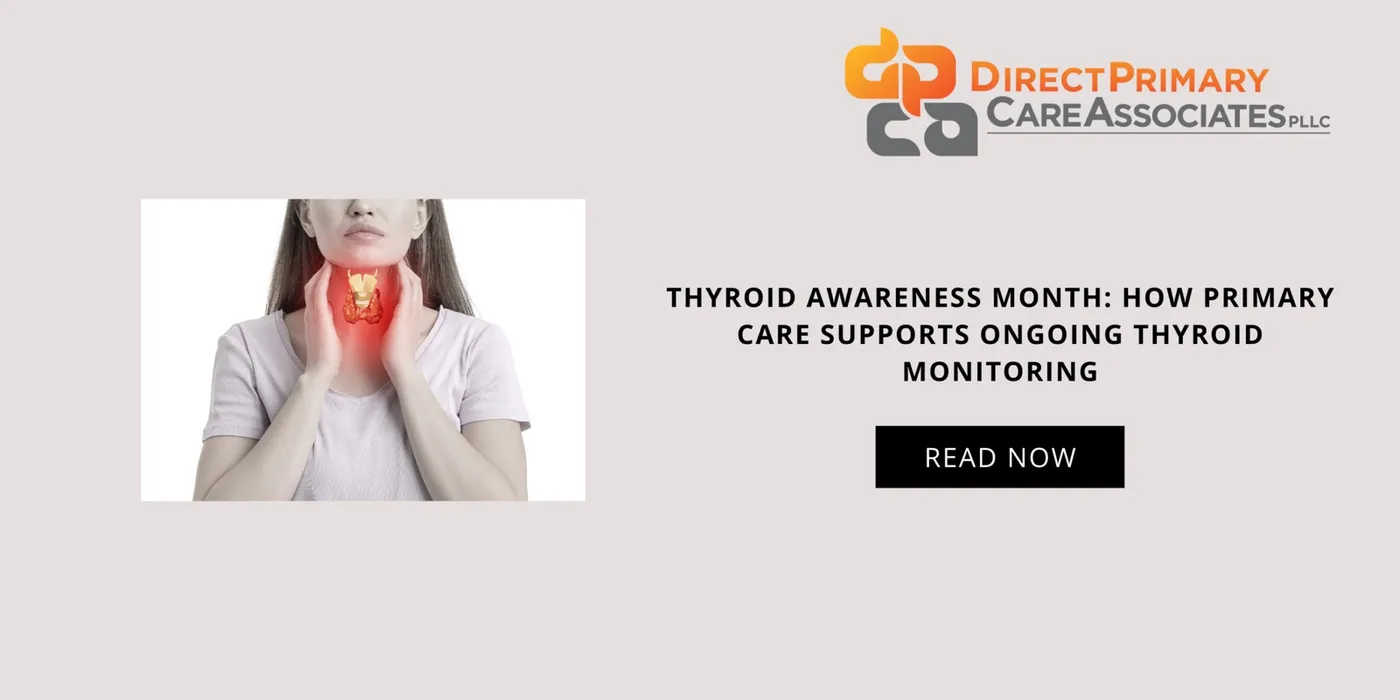
January marks thyroid awareness month, a time to focus on a small but powerful gland that quietly influences many of your body’s core functions. Because thyroid issues often develop slowly and show up in unexpected ways, they are easy to overlook without regular care.
Understanding how the thyroid works and how primary care supports ongoing monitoring can make a meaningful difference in long-term health.
The thyroid is a butterfly-shaped gland located at the front of the neck. Its main job is to produce hormones that help regulate how your body uses energy. These hormones influence metabolism, heart rate, body temperature, digestion, mood, and even concentration. For more on how hormone shifts affect daily life, see our post on how hormone imbalances affect mood, sleep, and weight.
When the thyroid is working well, these processes stay balanced. When it is not, the effects can show up across many parts of the body.
There are a few common thyroid conditions that primary care physicians watch for:
Because symptoms can overlap with other conditions, thyroid problems are often identified through a combination of symptoms, lab work, and medical history.
For most patients, a thyroid evaluation by a primary care physician is the starting point. Primary care doctors look at the full picture rather than isolated symptoms. This matters because thyroid changes often happen gradually.
Once a condition is identified, thyroid monitoring primary care becomes essential. Thyroid levels can shift over time due to age, stress, illness, or medication changes. Regular follow-ups help ensure levels stay within a healthy range and that treatment remains appropriate.
Thyroid screening is typically considered when symptoms suggest an imbalance, when there is a family history of thyroid disease, or when routine care points to possible changes. Screening is not about testing everyone all the time. It is about testing thoughtfully and interpreting results in context.
Primary care helps decide when screening is needed and how often it should be repeated.
Thyroid conditions are rarely one-time issues. They often require adjustments over months or years. Consistent primary care allows doctors to track trends, not just single lab values, and align those results with how you actually feel.
This steady approach helps prevent overcorrection and supports better long-term stability. Learn more about the primary care services we offer for ongoing monitoring.
Thyroid awareness month is a reminder that thyroid health is not just about diagnosis. It is about ongoing attention, informed monitoring, and having a primary care relationship that keeps your health on track.
At Direct Primary Care Associates (DPCA), we believe long-term conditions benefit most from consistent, relationship-based care. If you have questions about thyroid health or want support with ongoing monitoring, your primary care doctor can help guide the next steps with clarity and confidence. Our care team is here to help.
Not sure if you need an annual physical or a wellness visit? This guide explains the key differences, what each includes, and how to avoid surprise costs.

Wondering if your testosterone levels are low after 40? Learn what testing actually involves, from blood work and timing to what your results really mean.

Need a sports or school physical in Athens TN, Cleveland TN, or Dalton GA? We make it fast and easy, walk in or book your appointment today.
Signing up takes a few minutes, and you can bring your questions to your first visit.
Display options