

Annual Physical vs. Wellness Visit: What’s the Difference?
Not sure if you need an annual physical or a wellness visit? This guide explains the key differences, what each includes, and how to avoid surprise costs.
Blog

Healthcare today feels more complicated and costly than ever—for both patients and doctors. The traditional system, heavily reliant on insurance middlemen, often results in long waits, limited access, and growing out-of-pocket expenses. But there’s a refreshing shift underway: Direct Primary Care (DPC). This model is transforming primary care by focusing on simplicity, accessibility, and affordability. It’s a back-to-basics approach that puts patients and doctors first, and it’s quickly gaining momentum across the U.S.
At its core, Direct Primary Care eliminates the middleman—insurance companies—from routine primary care. Instead of relying on the traditional fee-for-service payment structure, DPC operates on a membership-based model, where patients pay a flat monthly fee directly to their physician. This fee typically ranges between $50 and $150 per month, depending on factors such as age and location. We cover this payment structure in more detail in Understanding Direct Pay Primary Care.
This membership fee covers a broad range of services, including:
By skipping the insurance bureaucracy, patients enjoy more direct access to their physician and a smoother healthcare experience. In turn, this allows physicians to focus on quality care rather than administrative tasks. Explore the full range of care included on our services page.
One of the most compelling reasons to consider DPC is the cost-effectiveness it offers. The flat monthly fee provides predictable healthcare costs, eliminating the uncertainty of copays, surprise bills, and complex insurance paperwork.
Moreover, the DPC model reduces overhead costs associated with insurance billing, claims processing, and coding by up to 40%. These savings are passed on to the patient, making care more affordable. By cutting out insurance companies from routine care, DPC enables doctors to provide better care while maintaining financially sustainable practices with fewer patients, allowing them to offer more personalized services.
Many DPC members also pair their membership with high-deductible health plans to cover catastrophic healthcare events, creating a hybrid model that provides comprehensive, affordable coverage with lower overall costs compared to traditional insurance-based plans.
One of the most powerful aspects of DPC is the restoration of the doctor-patient relationship. With significantly fewer patients (usually around 600-800 compared to over 2,500 in traditional practices), DPC physicians can:
This model enables physicians to truly get to know their patients—understanding their health needs, lifestyle, values, and goals—resulting in better preventive care and a more holistic approach to health management.
DPC offers significant advantages for various groups, particularly those who need more frequent or personalized care:
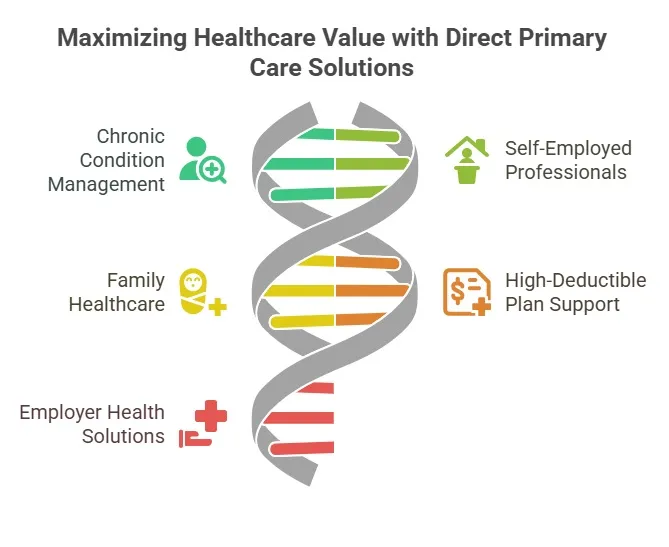
DPC is also ideal for anyone seeking more accessible care, longer visits, and a stronger relationship with their physician. Learn more about what this looks like on our For Individuals page.
With rising healthcare costs and increasing dissatisfaction with traditional insurance models, DPC is positioned for rapid growth. Studies show that DPC leads to better health outcomes, reduced emergency room visits, and fewer hospitalizations—all of which contribute to lower healthcare costs in the long term. This growth mirrors a larger trend we explore in Subscription Healthcare: Why Membership Medicine Is Growing Nationwide.
Bipartisan political support is also growing, with more states passing legislation to clarify that DPC memberships are not insurance and therefore not subject to insurance regulations. At the federal level, there are efforts to allow Health Savings Account (HSA) funds to cover DPC membership fees, which would further increase its accessibility.
While DPC offers many benefits, it represents a shift in how we think about healthcare. Instead of viewing it as a service maximized through insurance, DPC encourages individuals to consider primary care as an investment in health and well-being.
The idea of paying a flat monthly fee might seem like an added expense at first, especially for those used to traditional insurance models. However, when factoring in the elimination of copays, the removal of deductibles for routine care, and the added convenience of having direct access to your physician, many patients find DPC offers superior value in the long run.
By focusing on relationship-based care, DPC empowers patients to take control of their health in a way that traditional models simply can’t match. It’s a return to the fundamentals of medicine: a healing partnership between doctor and patient.
If you’re looking for affordable, accessible, and personalized healthcare, Direct Primary Care could be the right fit for you. Experience the difference of a model that puts patients first and allows for more in-depth, proactive care that supports long-term wellness.
Ready to make the shift? Discover how Direct Primary Care can transform your healthcare experience. Contact us today to schedule a consultation and explore how this innovative model can improve your health and peace of mind.
Not sure if you need an annual physical or a wellness visit? This guide explains the key differences, what each includes, and how to avoid surprise costs.

Wondering if your testosterone levels are low after 40? Learn what testing actually involves, from blood work and timing to what your results really mean.

Need a sports or school physical in Athens TN, Cleveland TN, or Dalton GA? We make it fast and easy, walk in or book your appointment today.
Signing up takes a few minutes, and you can bring your questions to your first visit.
Display options